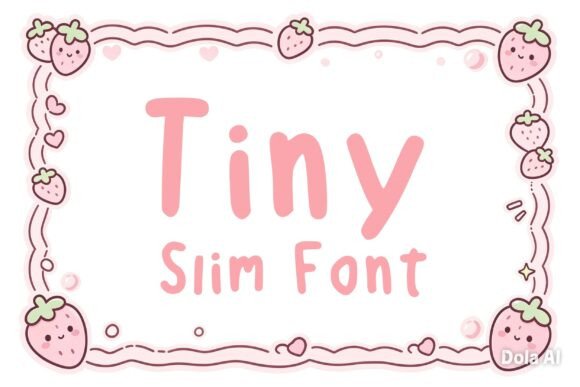
Tiny Slim Font for Web Design
Tiny Slim is a display font that brings a touch of sweet, minimalist charm to your layouts. Its slim and playful design features a tall, slender silhouette with soft, rounded edges, making it ideal for digital projects that require a casual yet elegant feel. As a web designer, you'll find Tiny Slim perfect for creating visual hierarchy and adding personality to your website's typography.
Tiny Slim for Website Headers and Hero Sections
When designing website headers or hero sections, Tiny Slim offers a unique blend of readability and style. Its slender form ensures it doesn't overwhelm the layout while still commanding attention. For example, using Tiny Slim for a landing page headline can create a clean, modern look that aligns with a brand's tone. Pairing it with a simple sans serif font for supporting text enhances contrast and improves overall readability.
- Use Tiny Slim for primary headlines on product landing pages
- Combine with a bold sans serif for subheadings and call-to-action buttons
- Optimize for mobile screens by adjusting letter spacing and line height
Tiny Slim for Online Store Banners and Digital Ads
Online stores and digital ads benefit from Tiny Slim's ability to add visual interest without sacrificing clarity. Its playful nature makes it well-suited for banners that aim to stand out while maintaining a professional appearance. When used on a banner for an e-commerce site, Tiny Slim can help reinforce brand identity and draw users' eyes toward key messages.
For digital ads, especially those targeting a younger audience, Tiny Slim adds a fresh, approachable vibe. Ensure it's paired with a complementary font for body copy to maintain legibility across different ad formats and platforms.
Tiny Slim for Creative Portfolios and Brand Kits
Creative portfolios often rely on strong visual elements to showcase work, and Tiny Slim provides a stylish yet subtle option for titles and section headings. Whether you're designing a personal portfolio site or a brand kit for a client, this font can help establish a consistent visual language. Its minimalistic aesthetic works well for branding that emphasizes simplicity and elegance.
When integrating Tiny Slim into a brand kit, consider its use in logo design, social media graphics, and packaging design. Its versatility allows it to adapt to various applications while maintaining a cohesive look across all touchpoints.
Tiny Slim for Blog Headers and Content Sections
Blogs and content sections often require a balance between readability and visual appeal. Tiny Slim can be used effectively for blog headers to add a touch of personality without distracting from the main content. Its soft curves and slender form make it ideal for headings that need to stand out but remain easy to read.
On longer articles, using Tiny Slim for subheadings or section titles can improve scanning behavior and guide readers through the content. Pair it with a more neutral font for body text to ensure the overall layout remains accessible and engaging.
Tiny Slim for Call-to-Action Buttons and Short Phrases
Call-to-action buttons and short phrases require fonts that are both attention-grabbing and easy to read. Tiny Slim fits this need perfectly, offering a delicate yet distinctive look that can enhance user engagement. When used for CTA buttons, it adds a refined touch that complements a modern design aesthetic.
For short phrases such as taglines or feature highlights, Tiny Slim provides a clean and memorable option. Its slim structure ensures it doesn't take up too much space, making it ideal for compact designs like app interfaces or mobile menus.
Tiny Slim for Mobile Responsiveness and Dark Mode
As mobile usage continues to rise, ensuring typography is optimized for smaller screens is essential. Tiny Slim maintains clarity on mobile devices when properly adjusted for size and spacing. Use it for headers and labels that need to be easily readable on touchscreens without appearing cramped.
In dark mode, Tiny Slim performs well when set against light backgrounds. Its soft edges prevent harsh contrasts that could strain the eyes, making it a good choice for websites that support both light and dark themes. Consider increasing the font size slightly for better visibility in low-light environments.
Tiny Slim for Font Pairing and Editorial Design
Font pairing is a critical aspect of web design, and Tiny Slim pairs well with a range of other typefaces. For editorial design, combining it with a serif font can create a balanced and sophisticated look. This combination works particularly well for blogs, magazines, or content-heavy websites that require a more traditional feel.
When working on a digital project that requires a mix of decorative and functional typography, Tiny Slim serves as an excellent accent. It can be used for headlines, logos, or decorative elements while allowing a simpler font to handle the bulk of the text.
Tiny Slim for Commercial Use and Licensing
Before using Tiny Slim in commercial projects, verify the licensing terms to ensure compliance. Many fonts offer commercial licenses that allow their use on websites, in digital templates, and for client projects. Check if the font includes webfont formats such as WOFF or WOFF2 for seamless integration into web designs.
For designers working on online stores, landing pages, or SaaS products, having access to a premium font like Tiny Slim can elevate the overall look and feel of the digital experience. Always confirm that the license covers all intended uses to avoid potential issues down the line.